Anti-Inflammatory Gut Friendly Breakfast Recipe to Keep You Satisfied
A good breakfast should do more than stop hunger for a few hours. It should feel gentle, keep energy steady, and give the gut something useful to work with. This creamy berry, kefir and oat bowl is built for that.
It combines fibre-rich oats, live yoghurt or kefir, berries, chia seeds, walnuts, ginger and turmeric. The result is a breakfast that tastes fresh and comforting, with ingredients often linked to digestive health and a balanced inflammatory response.

Why this breakfast supports the gut
This anti inflammatory gut friendly breakfast recipe works because it brings together three simple ideas: fibre, fermented food and colourful plants.
Oats contain beta-glucan, a type of soluble fibre that helps create a creamy texture and may support healthy cholesterol levels as part of a balanced diet. Fibre also feeds beneficial gut bacteria, which produce compounds that support the gut lining.
Kefir or live yoghurt adds fermented dairy to the bowl. These foods can contain live cultures, depending on the product. Look for wording such as “live cultures” on the label, rather than choosing by flavour alone (avoid the ones with artificial sweeteners) .
Berries contain polyphenols which natural plant compounds found in deeply coloured/ dark reds and purple foods. Walnuts, chia seeds and ground flaxseed add plant-based omega-3 fats, plus extra fibre.
Turmeric and ginger give the bowl its warmth. They are often used in anti-inflammatory cooking, though they work best as part of an overall varied diet rather than as a quick fix.
The recipe makes one generous bowl
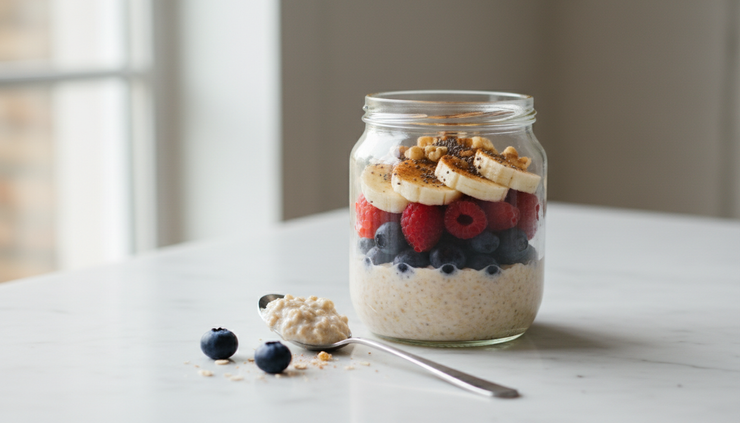
This is a make-ahead breakfast, so the oats soften overnight (or you can use the oats to make porridge in the morning then add the toppings).
Ingredients
For the oat base:
50 g rolled oats
120 ml plain kefir or live natural yoghurt
60 ml milk of your choice
1 tablespoon chia seeds
1 tablespoon ground flaxseed
½ teaspoon ground cinnamon
¼ teaspoon ground turmeric
½ teaspoon freshly grated ginger, or ¼ teaspoon ground ginger
1 teaspoon honey or maple syrup, optional
A small pinch of black pepper (increases absorption of turmeric) optional
For the topping:
75 g mixed berries, fresh or thawed from frozen
½ small banana, sliced
1 tablespoon chopped walnuts
1 tablespoon pumpkin seeds
A spoonful of kefir or yoghurt
A little lemon zest, optional

How to make it
1) Mix the base
Add the oats, kefir or yoghurt, milk, chia seeds, ground flaxseed, cinnamon, turmeric, ginger, honey/maple and black pepper to a bowl or jar. Stir well so the seeds do not clump.
2) Rest overnight (if doing the overnight version)
Cover and refrigerate for at least 4 hours, ideally overnight. The oats and seeds will absorb liquid and turn thick and creamy- great for digestion!
3) Check the texture
In the morning, stir the oats. If they feel too thick, add a splash of milk. If they feel too loose, add a few extra oats and leave for 5 minutes.
4) Add the topping
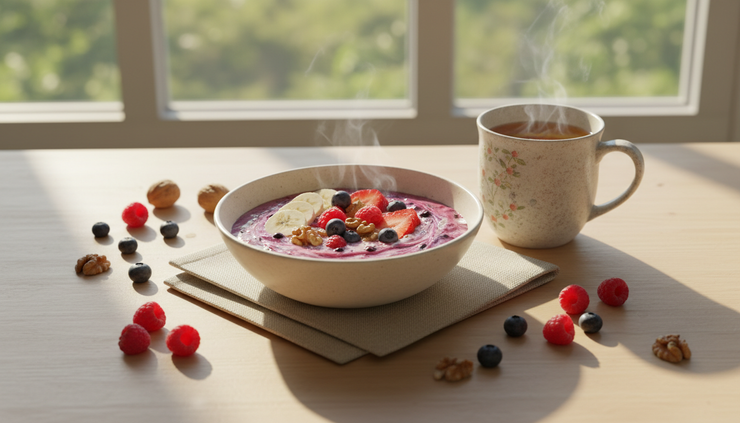
Spoon into a bowl then add berries, banana, walnuts, pumpkin seeds and a little extra kefir or yoghurt. Finish with lemon zest if using.
5) Eat slowly
This bowl is filling because it contains fibre, protein and fat. Give it a few minutes rather than rushing it, especially if your gut is sensitive in the morning.
Gentle swaps for different needs
Gut-friendly food is personal. A bowl that suits one person may feel too rich or too high in fibre for another. Start with the version below that feels closest to your normal eating pattern.
If you are new to high-fibre breakfasts
If dairy does not suit you
If berries feel too sharp
If you prefer less sweetness
If you need more protein
If you prefer warm porridge
Use ½ tablespoon chia seeds and skip the flaxseed for the first few days. Build up slowly and drink enough water.
Use a plain plant-based yoghurt with live cultures, plus unsweetened oat, almond or soya milk.
Warm them gently in a small pan until soft, then spoon them over the oats.
Skip the honey or maple syrup and use cinnamon, banana and berries for natural sweetness.
Add extra Greek-style yoghurt or a spoonful of smooth nut butter.
Make this as a porridge bowl in the morning and add your chosen toppings as normal.
For a lower-FODMAP style version, use lactose-free yoghurt or kefir if tolerated, choose a firm banana rather than a very ripe one, and keep the berry portion moderate. This may help some people, but it is not a substitute for individual advice.
What makes it anti-inflammatory
No single breakfast can “turn off” inflammation. The better goal is to eat in a way that supports the body day after day. This bowl fits that pattern because it uses foods common in anti-inflammatory diets.
You get colour from berries, fibre from oats and seeds, healthy fats from walnuts, and fermented food from kefir or live yoghurt. It also avoids the kind of breakfast that can leave some people feeling heavy, such as very sugary cereals or pastries eaten on their own.
Make it part of a steady morning
This recipe keeps well in the fridge for up to two days, though the texture gets thicker as it sits. If you want to prep ahead, make two jars at once and leave the toppings separate until serving.
A few small habits help the bowl work better:
Choose plain kefir or yoghurt, not heavily sweetened versions.
Use frozen berries when fresh ones are expensive or out of season.
Grind flaxseed before eating, or buy it ready ground and store it in the fridge.
Add milk in the morning if the oats become too thick.
Keep turmeric modest, as too much can taste bitter.

Comments