Protein-Packed Gut Friendly Breakfast: Eggs and Avocado on Sourdough
A breakfast that tastes good at 8 am but leaves you hunting for snacks by 10:30 is not doing its job. The best morning meals have a bit of staying power, and that usually means a mix of protein, fibre, healthy fats and slow-release carbohydrates.
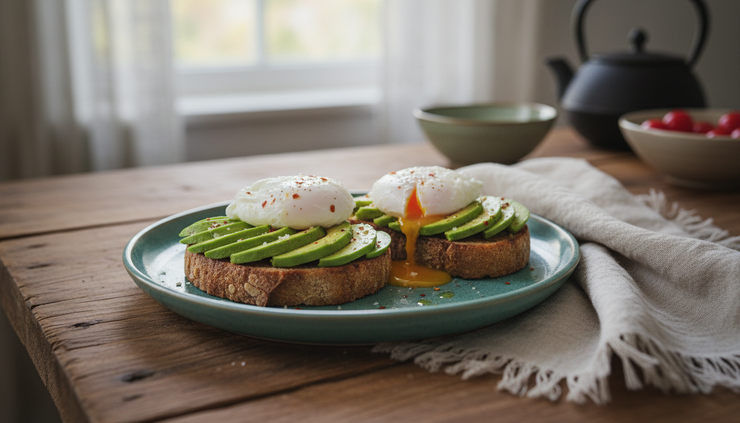
Eggs and avocado on sourdough ticks those boxes without feeling heavy. It is simple enough for a weekday, satisfying enough for a late breakfast and easy to adapt depending on appetite. It also has a gut-friendly edge, thanks to fermented sourdough and fibre-rich avocado.
Why this breakfast keeps you satisfied
Satiety is not about one single ingredient. It comes from the way the whole plate works together.
Eggs bring high-quality protein and fat. Protein takes longer to digest than refined carbohydrates, which helps slow the return of hunger. Two large eggs provide around 12 grams of protein, making them a strong base for breakfast.
Avocado adds fibre and unsaturated fats. Fibre helps bulk out the meal and supports digestion, while fat gives the breakfast a richer, more satisfying feel.
Sourdough adds carbohydrates, which matter more than many breakfast trends admit. A slice or two can give you energy for the morning, especially if you are active, walking, commuting, training, or simply need focus. Choosing proper sourdough over very soft, sugary bread can make the meal feel more balanced.
Together, this combination gives you:
Protein from the eggs
Fibre from the avocado and bread
Healthy fats from egg yolks and avocado
Carbohydrates from sourdough
Flavour from salt, pepper, lemon, herbs, or chilli
That is why eggs and avocado on sourdough can feel more satisfying than cereal, a plain slice of toast, or a coffee-only breakfast.
What makes it gut friendly
“Gut friendly” can mean different things, but for everyday eating it usually comes down to foods that support digestion and help you include more fibre and variety.
Sourdough is made through fermentation. During this process, wild yeasts and lactic acid bacteria help develop flavour and texture. This does not turn bread into a probiotic food once baked, because the heat kills live cultures, but fermentation can make sourdough gentler for some people compared with standard bread.
Avocado also plays a useful role. It contains fibre, including soluble fibre, which helps feed beneficial gut bacteria. A breakfast with some fibre is usually more supportive for digestion than one based only on refined carbs or protein with no plant foods.
Eggs do not contain fibre, but they are nutrient dense and easy to pair with fibre-rich ingredients. The key is the combination, not the egg alone.

How to build the perfect plate
The basic version is quick, but small choices make it better.
Choose a good sourdough
Look for a loaf with a simple ingredients list, ideally flour, water, salt, and starter culture. A chewy crust and slightly tangy flavour are good signs. Wholegrain sourdough can add more fibre, but white sourdough still works if that is what you enjoy.
Toast it well. A properly crisp slice holds avocado better and gives the meal more texture.
Cook the eggs your way
Poached eggs look lovely, but they are not the only option. Fried, scrambled, or boiled eggs all work.
For a reliable weekday version, scrambled eggs are the easiest. Cook them gently over a low heat and take them off the hob while they still look slightly soft. They will finish cooking from residual heat.
If you prefer poached eggs, add a splash of vinegar to simmering water, swirl gently, and crack the egg into the centre. Cook until the white sets and the yolk stays soft.
Season the avocado
Plain avocado can taste flat. Mash it with:
A squeeze of lemon or lime
A pinch of sea salt
Cracked black pepper
Chilli flakes if you like heat
Fresh herbs such as coriander, parsley, or chives
Acid matters here. Lemon or lime lifts the richness of the eggs and avocado, so the plate tastes fresh rather than heavy.
A simple recipe for eggs and avocado on sourdough
This version serves one hungry person or two lighter appetites.
Ingredients
Ingredient | Amount |
Sourdough bread | 1 to 2 slices |
Eggs | 2 |
Ripe avocado | ½ to 1 |
Lemon or lime juice | 1 small squeeze |
Olive oil or butter | 1 teaspoon, if frying or scrambling |
Sea salt and black pepper | To taste |
Chilli flakes or herbs | Optional |
Method
Toast the sourdough
Toast until golden and crisp. The bread should be firm enough to hold the toppings.
Prepare the avocado
Mash the avocado with lemon or lime juice, salt, and pepper. Keep it chunky if you like texture.
Cook the eggs
Poach, scramble, fry, or boil them. Aim for a soft yolk if you enjoy it, as it creates a natural sauce for the toast.
Assemble the toast
Spread the avocado over the sourdough. Add the eggs on top. Finish with extra pepper, herbs, chilli flakes, or a drizzle of olive oil.
Eat while warm
This breakfast is best when the toast is crisp and the eggs are still warm.

Easy ways to make it even more filling
If you often feel hungry before lunch, the answer may be portion size rather than willpower. Try one of these small upgrades.
Add another egg if breakfast needs to carry you through a long morning. This is the simplest way to raise the protein.
Choose wholegrain sourdough for more fibre and a nuttier flavour.
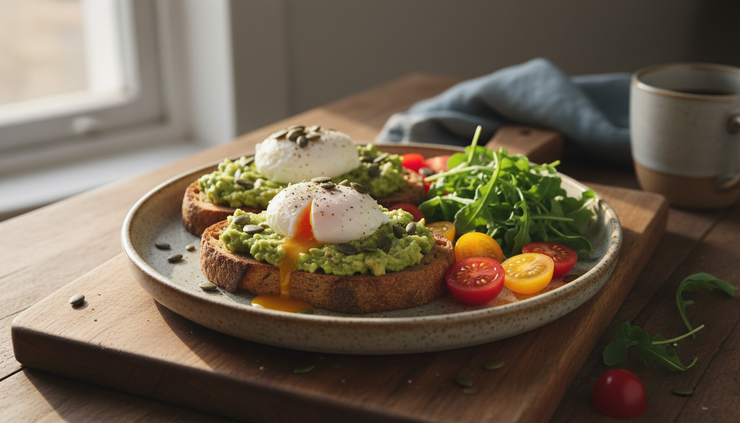
Add greens such as spinach, rocket, or watercress. They bring freshness and extra plant variety.
Serve with tomatoes or mushrooms for more volume without making the plate too rich.
Sprinkle seeds on top. Pumpkin, sesame, or hemp seeds add crunch and a little extra protein and fat.
If you train in the morning, use two slices of sourdough rather than one. Carbs help refill energy stores and can make the meal more satisfying.
Common mistakes that make it less satisfying
The first mistake is using too little protein. One egg on one small slice of toast might be delicious, but it may not keep you full until lunch. For most people, two eggs makes a more balanced breakfast.
The second mistake is skipping seasoning. Salt, pepper, lemon, and chilli make a big difference. A well-seasoned breakfast is more satisfying because it tastes complete.
The third mistake is using an underripe avocado. It should yield gently when pressed, but not feel mushy. If it is too firm, it will not mash well and can taste bland.
The last mistake is eating too quickly. A filling breakfast works best when you actually sit down and enjoy it, even if only for ten minutes.
The takeaway
Eggs and avocado on sourdough is more than a good-looking brunch plate. It is a balanced, practical breakfast that brings together protein, fibre, healthy fats, and satisfying carbohydrates.
For the most filling version, use proper toasted sourdough, two eggs, ripe avocado, and bright seasoning such as lemon, pepper, and chilli. Add greens, tomatoes, mushrooms, or seeds when you want more fibre and colour.
Simple food often works best when each part has a job. Here, the eggs keep it protein-rich, the avocado makes it creamy and fibre-friendly, and the sourdough turns it into a breakfast that can genuinely see you through to lunch.

Comments